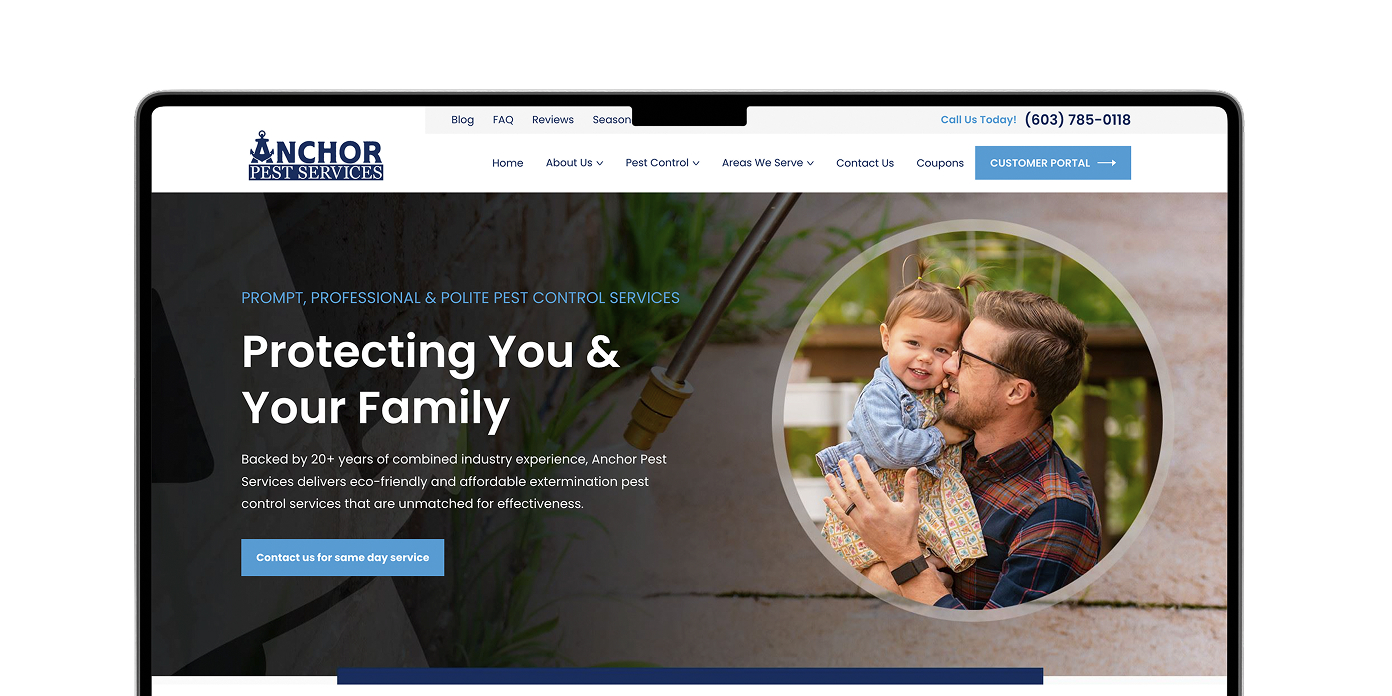
How Anchorpest Turned SEO Into Its N1 Lead Channel
How Anchorpest Turned SEO Into Its N1 Lead Channel
From Invisible in Search to 7,790 Monthly Organic Clicks in Under 8 Months
Anchorpest had a problem most local service businesses know too well:
- Paid ads were doing all the heavy lifting.
- Every new lead depended on ad spend. Organic search was barely moving. And larger competitors were dominating Google for almost every pest-related search in their market.
- So the entire acquisition system was rebuilt from the ground up.

The result
No bloated SEO retainers. No endless blog writing. Just a scalable organic growth engine designed to compound over time.
monthly organic clicks
7,790
growth in organic traffic
+940%
targeted pSEO pages launched
176+
organic conversion rate
~10%
inbound leads per week from search alone
21–25
About Anchorpest
Anchorpest is a residential and commercial pest control company serving Manchester and surrounding areas.
A $30M construction company operating across 6 locations with 120 field crews was drowning in paper. Thousands of invoices flowed in every month from suppliers, subcontractors, equipment rentals, and fuel vendors. And every one of them was processed by hand. Despite the size of the operation, the finance function was running on manual data entry, gut-feel approvals, and quarterly audit catch-ups.
The Problem
When work began in August 2025, Anchorpest had almost no organic visibility.
The website was generating fewer than 250 weekly Google visits, with most traffic landing on just two pages.
There was:
- no scalable content strategy
- no reliable lead attribution
- no SEO infrastructure
- no way to compete against larger national brands organically
At the same time, the business was heavily dependent on a single Google Ads campaign that kept spending money without building long-term value.
The bigger issue?
Pest control search demand is fragmented across thousands of highly specific searches.
People don’t just search:
“pest control”
They search:
- “can mice climb walls”
- “what smell keeps rats away”
- “are termite treatments dangerous for dogs”
Without a system to capture this long-tail demand at scale, Anchorpest had no realistic path to dominate local search.

The Strategy
The organic acquisition engine was rebuilt around one core idea:
Capture high-intent search traffic before competitors do.
Instead of publishing random blog posts, real customer search behavior was mapped and organized into focused topic clusters, including:
- Mice & Rats FAQ
- Safety for Pets
- Tick & Flea Prevention
- Mosquito Control
- DIY Pest Methods
- Fall Invaders
- Termite & Mite Issues
- Smell-Related Searches
Using a scalable programmatic SEO framework, 176+ highly targeted pages were launched between August 2025 and April 2026.
Each page was designed to target:
- urgent homeowner questions
- local intent searches
- service-related buying keywords
At the same time, the website foundation was rebuilt:
- technical SEO issues fixed
- broken links removed
- metadata rewritten for higher click-through rates
- outdated service pages refreshed
- local trust signals improved with real team photography
But traffic alone doesn’t pay the bills.
So full lead tracking infrastructure was also implemented, allowing Anchorpest to finally measure:
- phone calls
- contact form submissions
- organic lead volume
accurately for the first time.
To improve paid acquisition efficiency, the underperforming Google Ads campaign was replaced with Local Services Ads in Manchester, shifting spend toward verified local leads while SEO handled long-term traffic growth.
The Results
The growth compounded month after month.

Monthly organic visits increased from roughly 750 to 7,790 in under 8 months.
That’s a 940% increase in organic traffic.
Search became Anchorpest’s largest and most reliable customer acquisition channel.
97% of all organic traffic now comes directly from the new content system.
And the growth is still accelerating.
March 2026 alone produced:
- +44.5% month-over-month growth
- the strongest traffic month in company history
This wasn’t a temporary SEO spike.
It became a compounding traffic asset.
Several pages began generating meaningful traffic independently:
- Mice & Rats FAQ → 2,588 visits in March 2026
- Pet Safety page → 1,490 visits
- Peak weekly traffic on top pages → 440+ visits
Instead of relying on a handful of pages, Anchorpest now owns traffic across dozens of intent-driven search categories.
Traffic turned into revenue.
Approximately 10% of organic visitors now convert into:
- phone calls
- contact form submissions
- booked consultations
Organic search alone now generates 21–25 new leads every week.
Without depending entirely on paid ads
The Outcome
Anchorpest didn’t just improve rankings.
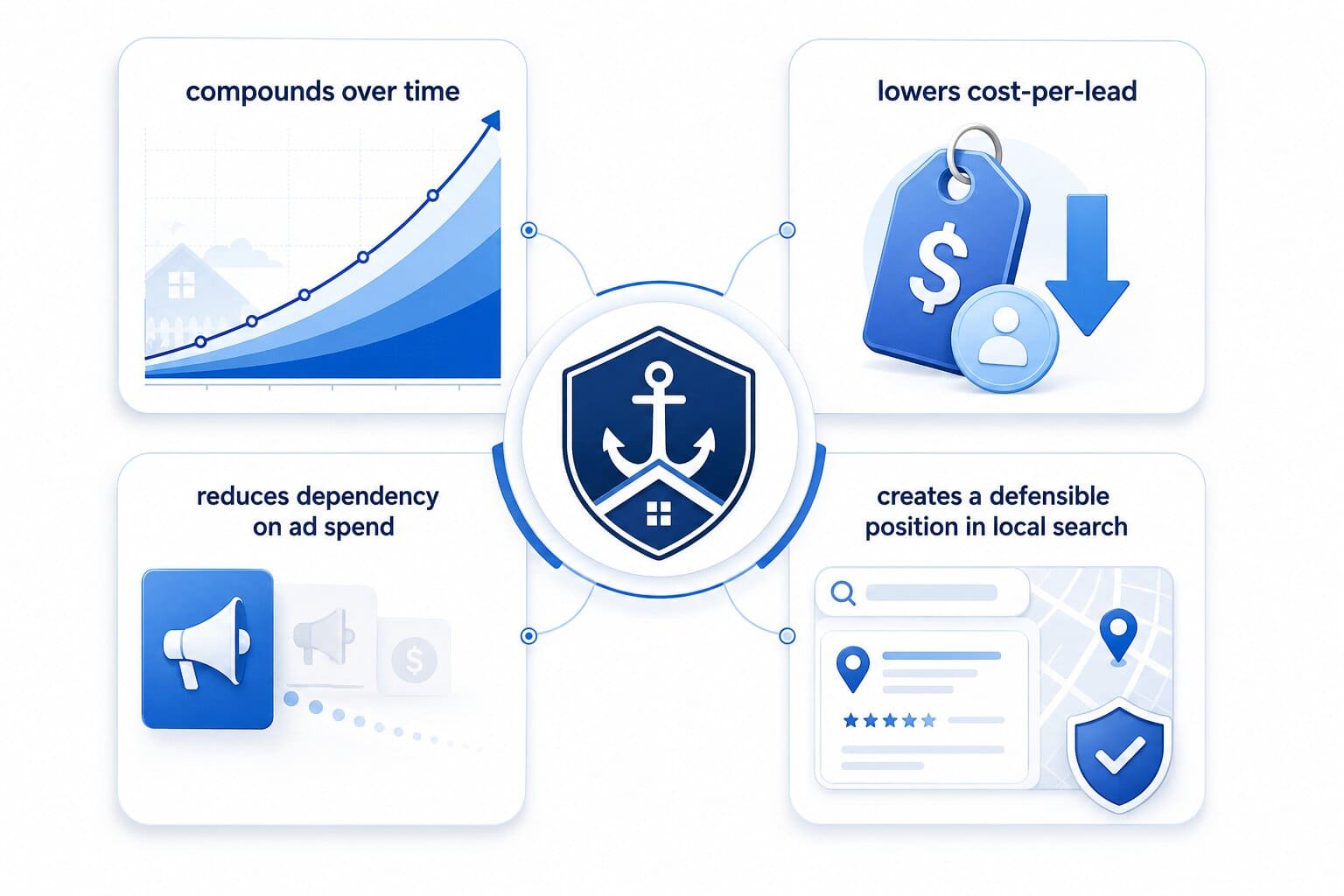
They built a repeatable customer acquisition system that:
- compounds over time
- lowers cost-per-lead
- reduces dependency on ad spend
- creates a defensible position in local search
Most local businesses treat SEO like a side channel.
Anchorpest turned it into a growth engine.
See how we did it